Walkthrough: Usa ka Pagsaka sa Fibonacci
Follow $5 Fibonacci stakes through two completed attempts and a nine-loss run that reaches the table limit.
Usa ka gisimulate nga 90 ka tuyok nga sesyon sa Fibonacci nga $5 ang usa ka yunit. Kawhaan ka siklo ang nahuman alang sa $5 matag usa, usa ka daotang dagan hangtod sa ikasiyam nga termino ($170 nga pusta) nga mibilin sa sesyon nga ubos og $340. Mas malumo kaysa pagdoble hangtod nga dili na.
Lakawa ang han-ay
Ang usa ka pildi mobalhin og usa ka lakang ngadto sa tuo. Ang usa ka daog mobalik og duha ka lakang.
Ang mga pusta ug resulta anaa sa mga yunit sa batakang pusta.
Ang plano
Bet on blackpustaItomEven-money nga pusta sa 18 ka itom nga numero. Sa Pranses: noir.Basaha tanan → on a standard single-zeroligidSeroAng usa ra ka berde nga bulsa nga walay even-money, dosena o kolum nga pusta ang motabon; ang gigikanan sa bentaha sa casino. Gitawag usab: single zero, 0.Basaha tanan → wheel. Use stakes of $5, $5, $10, $15, $25, $40, $65, $105, $170, $275 and so on. Move one position right after a loss and two left after a win, never before the first position. Start with $1,000 and a $200 stake limit. Stop if the next required stake exceeds the limit or balance.
Mga tuyok 1–40
Napulog-usa ka siklo ang nahuman, ang labing taas nakaabot sa ikalima nga termino ($25). Ang matag nahuman nga siklo mohatag og eksakto $5; nindot ang pagkuwenta ug nagpabiling gagmay ang mga pusta. Net +$55. Morag Martingale nga gikuhaan sa kalisang.
Mga tuyok 41–70
Lima pa ka siklo ang nahuman sa tuyok 60 (+$25). Dayon ang siklo nga dili mahuman. P P P P P P P D P P: mga pusta 5, 5, 10, 15, 25, 40, 65 (pito ka pildi, −$165), usa ka daog sa $105 (+$105, moatras og duha ngadto sa $40), dayon duha ka pildi sa $40 ug $65. Anaa na kita sa ikawalo nga termino, $105, nga −$165 sa siklo, ug ang sunod nga pildi mopadala kanato sa $170 batok sa $200 nga limitasyon sa lamesalamesaLimitasyon sa lamesaMinimum ug maximum nga pusta nga gitugotan. Ang maximum mao ang mopahunong sa mga progresyon nga nagdoble.Basaha tanan →. Net alang niini nga bahin −$140.
Ang mga kuwenta
The ledger totals $460 wagered and −$430 net, leaving $570 from a $1,000 starting balance. At each spin, the expected lossmatematikaGidahom nga kapildihanAng gidahom nga bili gipadaghan sa tibuok kantidad nga gipusta; ang average nga kantidad nga mapildi sulod sa usa ka sesyon o usa ka yugto.Basaha tanan → under these standard single-zero rules is the stake divided by 37. Because later bets or stopping can depend on earlier results, expected session loss depends on expected total turnoverkwartaKinatibuk-ang gipustaAng tibuok kantidad nga gipusta sulod sa usa ka sesyon o yugto, lakip ang mga daog nga gipusta pag-usab. Gitawag usab: handle, action.Basaha tanan →. A single worked sequence does not establish the average session result.
Unsay gipakita sa sesyon
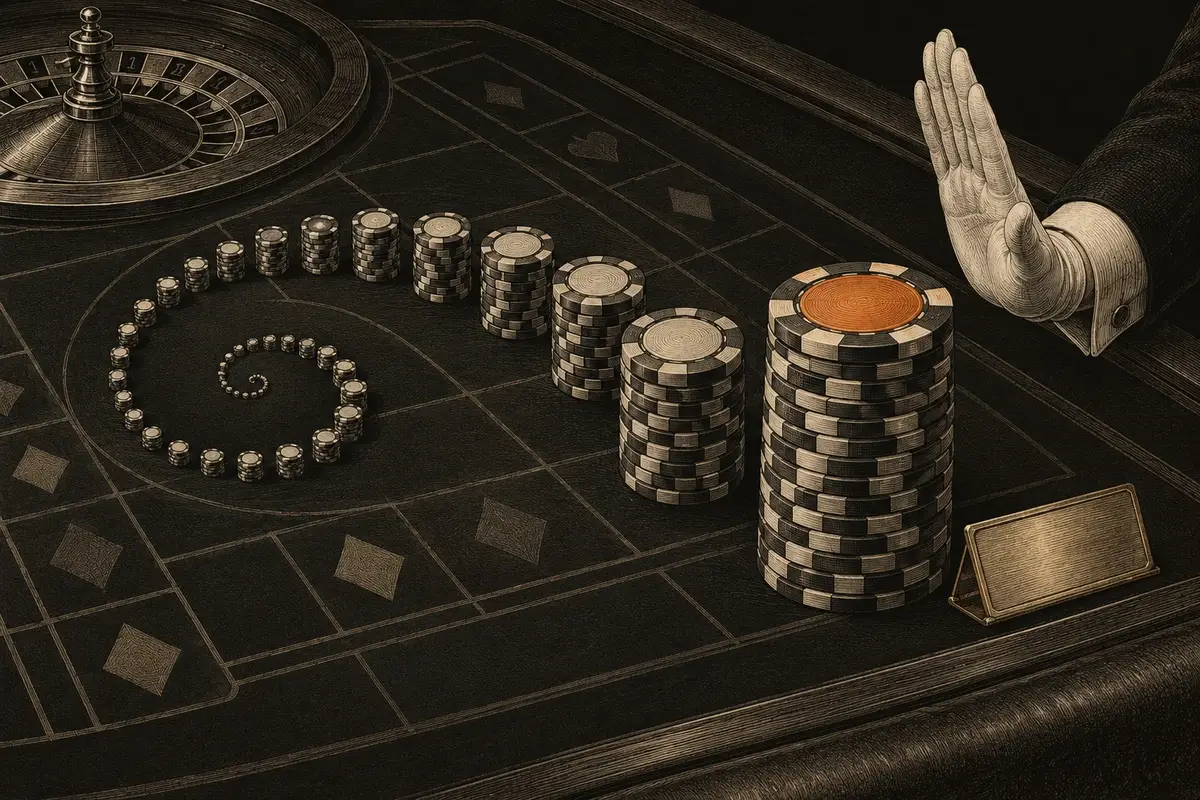
FibonacciestratehiyaFibonacciProgresyon nga nagsunod sa han-ay nga 1, 1, 2, 3, 5, 8, 13…: usa ka lakang paabante human sa pildi, duha ka lakang paatras human sa daog.Basaha tanan → stakes rise more slowly than MartingaleestratehiyaMartingaleProgresyon nga modoble sa pusta human sa matag pildi. Tan-awa ang seksyon sa Estratehiya kon unsay mahimo ug dili mahimo niini.Basaha tanan → stakes over the same loss count, but they still grow. The ratio of successive terms approaches 1.618; it is not exactly 1.6 at every step. A smaller required stake after a particular run is not a general guarantee of a safer or profitable session.
Mga pangutana
Tungod kay ang daog sa termino n mobawi sa mga pildi sa termino n−1 ug n−2, nga ang sumada niini mao kana. Ang han-ay gitukod alang sa lagda.
The twelfth stake, $720. The first eleven are $5, $5, $10, $15, $25, $40, $65, $105, $170, $275 and $445. Your balance may become the binding limit earlier.
No. For example, after losing $5 and then winning $5, the result is still zero. Returning to the first position and reaching a positive target are different things.
Komiks nga pahulay
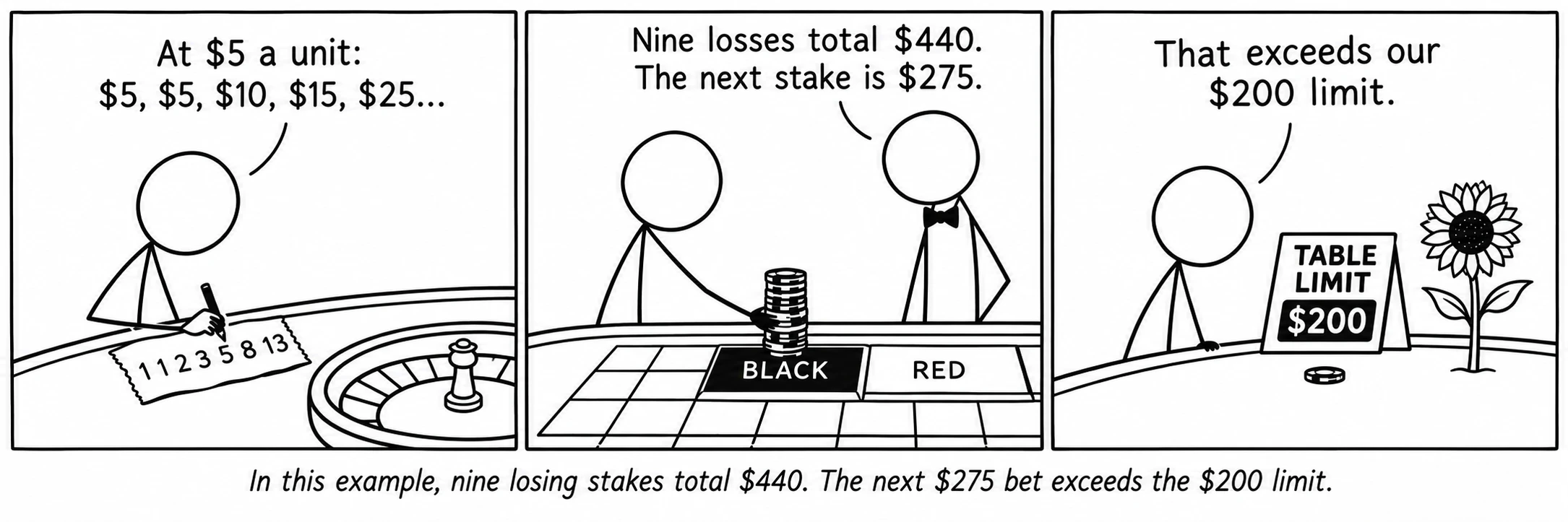
Ang golden ratio 1.618. Ang bentaha sa casino 2.70% gihapon.
Mga Tinubdan
- Ethier, S. N. The Doctrine of Chances: Probabilistic Aspects of Gambling.