Mga Kompyuter sa Roulette
Unsaon sa kompyuter pag-timing ang bola, kinsay naghimo sa unang mga kompyuter, ug unsa ka tukma kini kinahanglan.
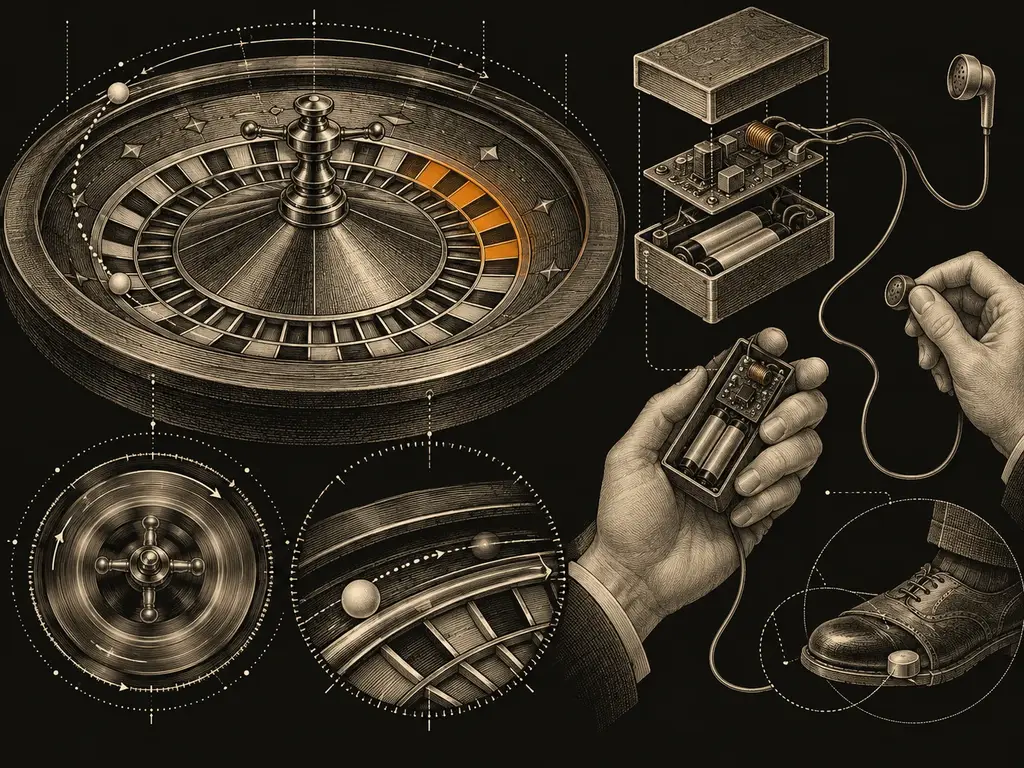
Ang kompyuter sa roulette mag-timing sa bola ug sa rotor sa unang mga segundo sa tuyok ug mosulti kon asang bahin sa ligid angay motugpa ang bola. Si Edward Thorp ug Claude Shannon ang naghimo sa una niadtong 1961, ug ang mga Eudaemon naghimo og digital nga mga kompyuter sukad 1976. Ang pamaagi nagkinahanglan nga dawaton ang mga pusta human sa paglarga: ang live nga mga studio karon mosira sa pagpusta sa paglarga, ug gidili sa Nevada ang maong mga device sukad 1985.
Giunsa paghimo ang unang sistema sa kompyuter sa roulette
In his 1998 account, Edward Thorp dates the idea to 1955 and describes working with Claude Shannon at MIT in 1960–61. They studied a regulation wheel on a slate billiard table in Shannon’s basement, using a clock and strobe light to improve their timing.
By June 1961 they had a cigarette-pack-sized analog computer with twelve transistors. Toe-operated switches timed the ballkagamitanBolaAng gamay nga bola nga gilabay sa agianan supak sa rotor. Ang modernong mga bola hinimo sa ivorine o Teflon, 18–21 mm.Basaha tanan → and rotorkagamitanRotorAng motuyok nga bahin sa ligid nga nagdala sa mga bulsa.Basaha tanan →; tones identified one of eight sectorsligidSektorUsa ka padayon nga arko sa mga bulsa sa ligid, lahi sa usa ka grupo sa layout.Basaha tanan → to bet on. Thorp reports testing it in Las Vegas that summer with ten-cent chipskwartaChipUsa ka token nga nagrepresentar og piho nga kantidad, gibutang sa layout aron makapusta. Gitawag usab: check.Basaha tanan →. Repeated breaks in the earpiece wires prevented sustained serious betting. Distance and competing work later kept the project from continuing.
This is the inventor’s retrospective account, not an independent casino trial report. His 1969 paper gives 1957 for the initial idea; the later account gives 1955. Both describe work completed by 1961.

Ang unang digital nga mga kompyuter
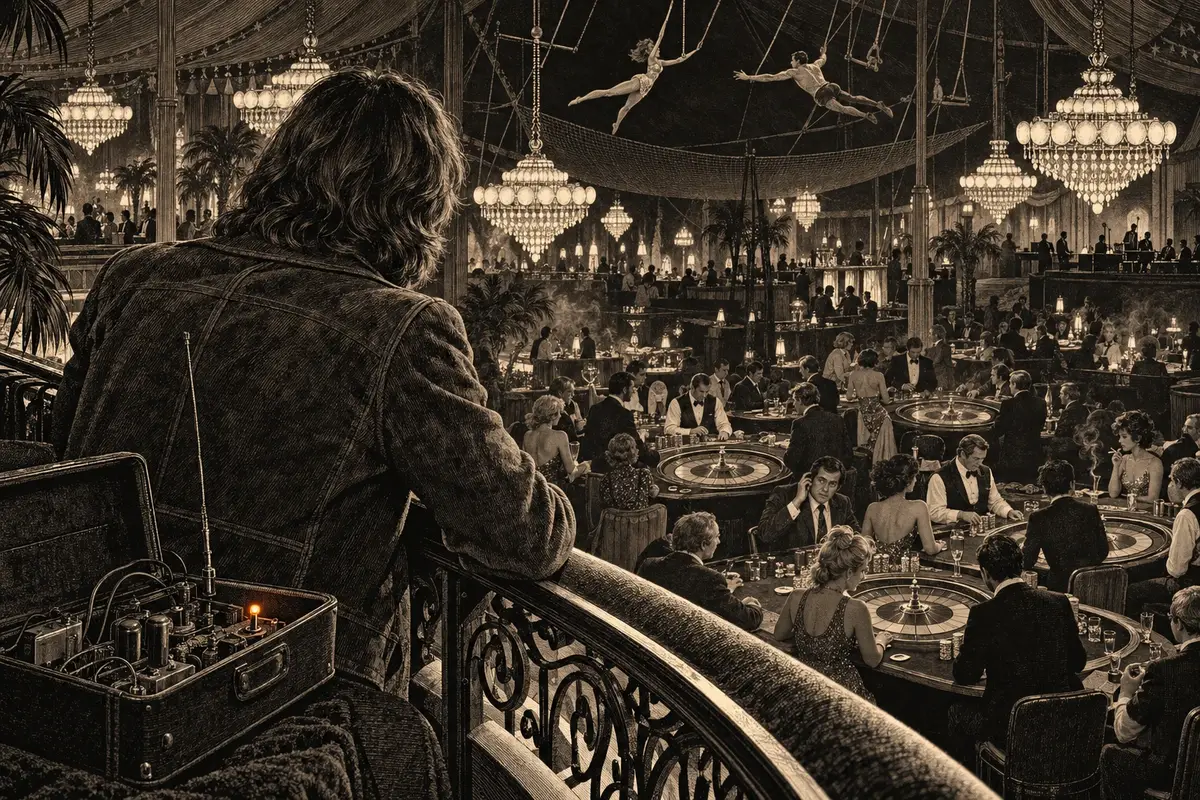
Ang makina ni Thorp ug Shannon analog: ang sirkito niini mao ang programa niini, ug ang pag-usab sa pamaagi nagpasabot og pag-usab sa wiring. Gikuha sa microprocessor kana nga limitasyon. Si Alan Lewis, estudyante sa Caltech, nagdala og digital nga kompyuter nga hinimo sa balay sulod sa kaso sa camera ngadto sa Circus Circus sa Las Vegas niadtong 1972, nag-timing sa mga ligid gikan sa balkonahe ibabaw sa mga lamesa ug nag-radyo sa mga tagna ngadto sa kauban sa ubos. Midagan kini, ug walay kwarta nga nakuha; nahibaloan niya sa ulahi nga wala niya iapil ang kiling sa ligid. Sukad 1976 ang grupo sa mga estudyante sa pisika sa Santa Cruz, ang mga Eudaemon, nagbuhat sa trabaho nga hingpit. Mipalit sila og ligid sa casino, gisukod ang bola, ang rotor, ang kiling ug ang buntog, ug nagsulat og mga ekwasyon nga may lima ka setting nga gi-adjust sa magdudula para sa matag ligid pinaagi sa pag-klik sa mga switch sa tudlo sa tiil sulod sa mga baynte minutos sa dili pa mopusta. Ang ilang kompyuter nagsulti sa usa sa walo ka sektor pipila ka segundo sulod sa tuyok. Sa tinuod nga lamesa niadtong Enero 1978 mihatag kini og bentaha nga ilang gibana-bana nga 25%; ang hardware, nga gihigot sa lawas ug sa ulahi gibutang sa sapatos, mas kanunay nga napakyas kay sa pisika (tan-awa ang Ang mga Eudaemon).
Nganong importante ang ulahing mga pusta
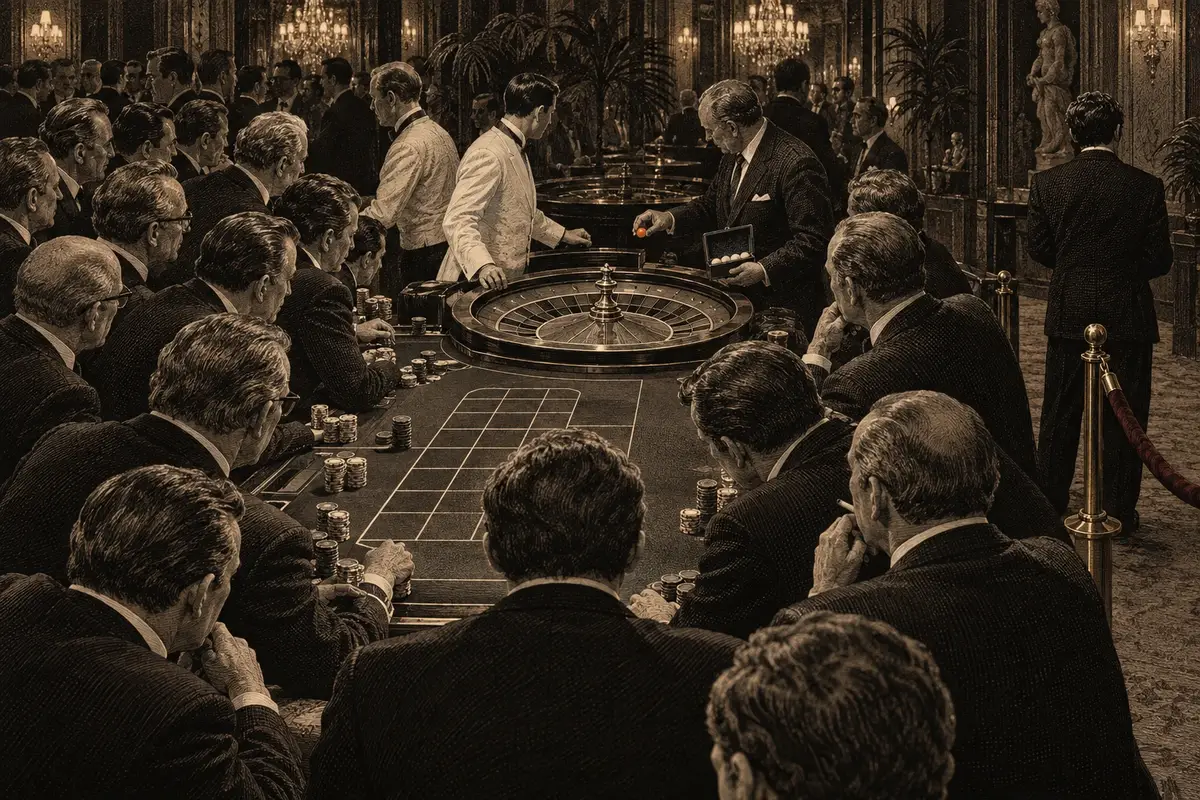
A strategy that measures the current spin cannot use those measurements if betting has already closed. Thorp’s account describes late betting in games he observed, not every modern studio. Nevada’s device provision dates to 1985; its current wording includes an approval exception.
Giunsa pagbatok sa mga casino
A predictor fitted to one setup needs fresh validation when the wheel, ball or operating conditions change. A change does not by itself prove that prediction has become impossible; what matters is the resulting prediction error and whether it still supports the proposed bet.
In his 1998 account, Thorp identifies closing bets before launch as a way to prevent his method from using the current spin. This is a constraint on that method, not evidence that every casino follows the same procedure. Check the actual betting deadline rather than assuming that a historical account describes today’s game.
Unsa ka maayo ang tagna kinahanglan
The table uses a mathematical model: prediction error is a centered normal distribution wrapped around 37 pocketskagamitanBulsaUsa sa 37 ka numerado nga kompartamento sa rotor. Gitawag usab: slot, cup.Basaha tanan →, each one unitkwartaYunitAng base nga pusta nga gigamit sa usa ka sistema o magdudula. Ang mga progresyon gihulagway sa mga yunit aron magamit kini sa bisan unsang lamesa.Basaha tanan → wide. Expected return follows by integrating the selected pocket interval and applying 35:1 payoutskwartaBayad sa daogUnsay ibalik sa nidaog nga pusta, gipahayag isip “X sa 1” dugang sa gibalik nga pusta.Basaha tanan →. This is a model illustration, not measured accuracy for a current device. At σ = 10 it gives about +43.9% for one pocket or +42.5% for five centered pockets. Break-evenmatematikaTablaAng punto diin ang gidahom nga bili sa usa ka pusta eksakto nga sero, busa walay kilid nga adunay bentaha. Kasagaran usa ka bayad sa daog o gidak-on sa jackpot.Basaha tanan → is about 17.22 pockets for one and 17.16 for five. A different error distribution gives different values.
Mga pangutana
Dili. Walay bola. Ang numero gipili sa software sa dili pa ang animasyon.
Mahimo silang maapektuhan sa timing, mao nga walay usa nga gipadagan nianang paagiha.
Lingaw sa Matematika
Sulayi una kini sa imong kaugalingon. Ang matag solusyon gitakpan; ablihi kini kon andam na ka.
Ang silinganpustaMga silinganUsa ka numero ug ang duha ka bulsa sa matag kilid niini sa ligid, lima ka chip sa usa ka numero matag usa.Basaha tanan → nga tawag mobutang og usa ka chipkwartaChipUsa ka token nga nagrepresentar og piho nga kantidad, gibutang sa layout aron makapusta. Gitawag usab: check.Basaha tanan → sa usa ka numero ug sa duha ka bulsakagamitanBulsaUsa sa 37 ka numerado nga kompartamento sa rotor. Gitawag usab: slot, cup.Basaha tanan → sa matag kilid niini sa ligid: lima ka chip. Unsa ka kanunay kinahanglan motama ang tagna sa maong lima ka bulsa aron mahimong tabla, ug pila ang ganansya niini kon husto kini kausa sa lima?
Ipakita ang solusyon
Tubag Tabla kini sa 5 sa 36, 13.9%, batok sa 13.5% pinaagi sa swerte lang. Kon husto kausa sa lima, mobalik kini og 44% labaw sa gipusta niini.
If the call hits, one chip wins 35 to 1 and comes back with its winnings, 36 chips, and the other four are lost. So a hit returns 36 for 5 staked, and the call breaks even if it hits 5 times in 36, 13.9%. By chance it hits 5 times in 37, 13.5%. That small gap, less than half a percentage point, is where the whole 2.70% comes from.
At one hit in five, 0.2 × 36 = 7.2 chips come back for every 5 staked, +44%. At one in four, +80%.
These are expected returns under the stated success probabilities and payoutskwartaBayad sa daogUnsay ibalik sa nidaog nga pusta, gipahayag isip “X sa 1” dugang sa gibalik nga pusta.Basaha tanan →. A prediction would need independently measured accuracy; this calculation does not establish that any device or player achieves it.
Consider four independent, zeroligidSeroAng usa ra ka berde nga bulsa nga walay even-money, dosena o kolum nga pusta ang motabon; ang gigikanan sa bentaha sa casino. Gitawag usab: single zero, 0.Basaha tanan →-mean prediction errors whose standard deviationsmatematikaStandard deviationSquare root sa variance; ang kasagarang gilay-on sa usa ka resulta gikan sa gidahom nga bili.Basaha tanan →, measured in pockets, are 1.4, 5.5, 7 and 6. The first two represent timing errors. What is the combined standard deviation, and how much would eliminating both timing errors reduce it?
Ipakita ang solusyon
Tubag Mga 10.8 ka bulsa sa kinatibuk-an. Kon walay sayop sa pag-oras kini mahimong 9.2, busa ang duha ka pag-oras modugang lamang og 1.6.
For independent errors, variancesmatematikaVarianceSukod kon unsa kalapad mokatag ang mga resulta palibot sa gidahom nga bili. Taas alang sa pusta sa usa ka numero, ubos alang sa even-money nga mga pusta.Basaha tanan → add. The combined standard deviation is √(1.4² + 5.5² + 7² + 6²) = √117.21 ≈ 10.83 pockets.
Without the timing errors it is √(7² + 6²) = √85 ≈ 9.22 pockets. The reduction is about 1.61 pockets, not 1.4 + 5.5.
This is a hypothetical error budget. Correlated errors require covariance terms, and a standard deviation alone does not determine a prediction’s hit rate or betting return.
Komiks nga pahulay
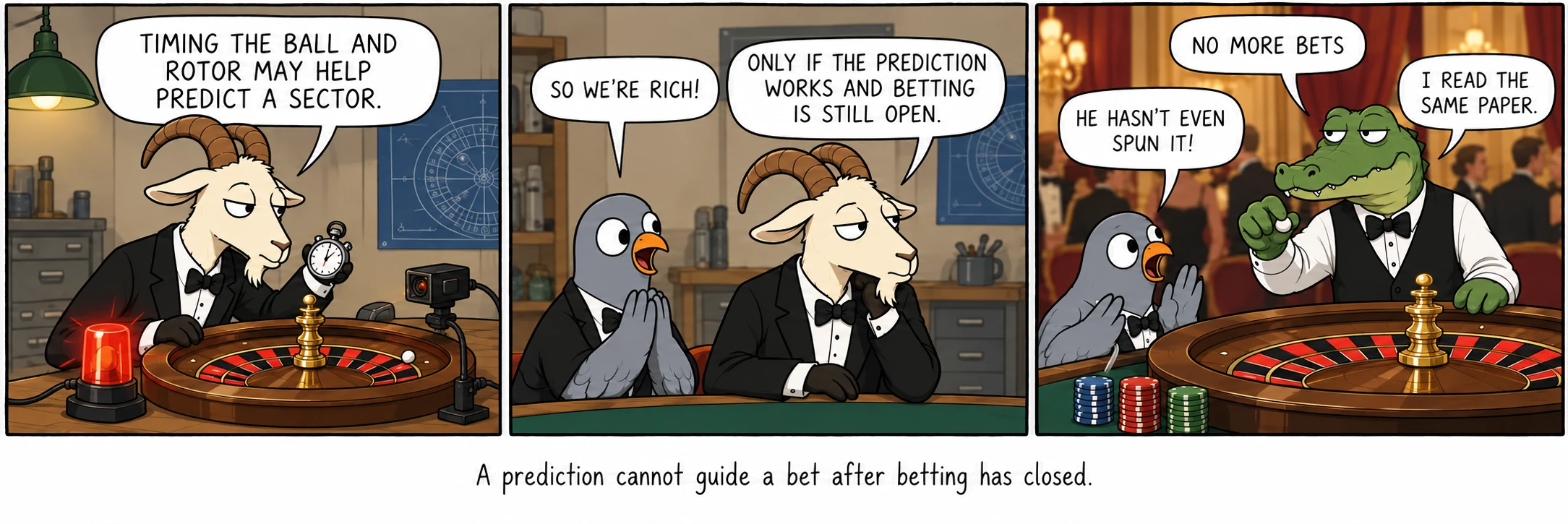
Mogana ang pisika. Nasirado ang panahon sa pagpusta.
Mga Tinubdan
- Thorp, E. O. “Optimal gambling systems for favorable games.”
- Thorp, E. O. The Mathematics of Gambling.
- Thorp, E. O. “The invention of the first wearable computer.”
- Bass, T. A. The Eudaemonic Pie.
- Small, M. & Tse, C. K. “Predicting the outcome of roulette.”
- Goldman, N. Great Gambling Scams.
- Nevada Revised Statutes, chapter 465.
- Edward O. Thorp, The Invention of the First Wearable Computer
- Nevada Revised Statutes 465.075 — gisusi niadtong 15 Nobyembre 2026
- Bradley Rhodes, A brief history of wearable computing
- J. Doyne Farmer, Roulette
- Heinz Nixdorf MuseumsForum, Shoe computer