Kasaysayan sa mga Sistema sa Roulette
Duha ka siglo sa mga tawo nga nagsulat og mga lagda sa pag-usab sa ilang pusta.
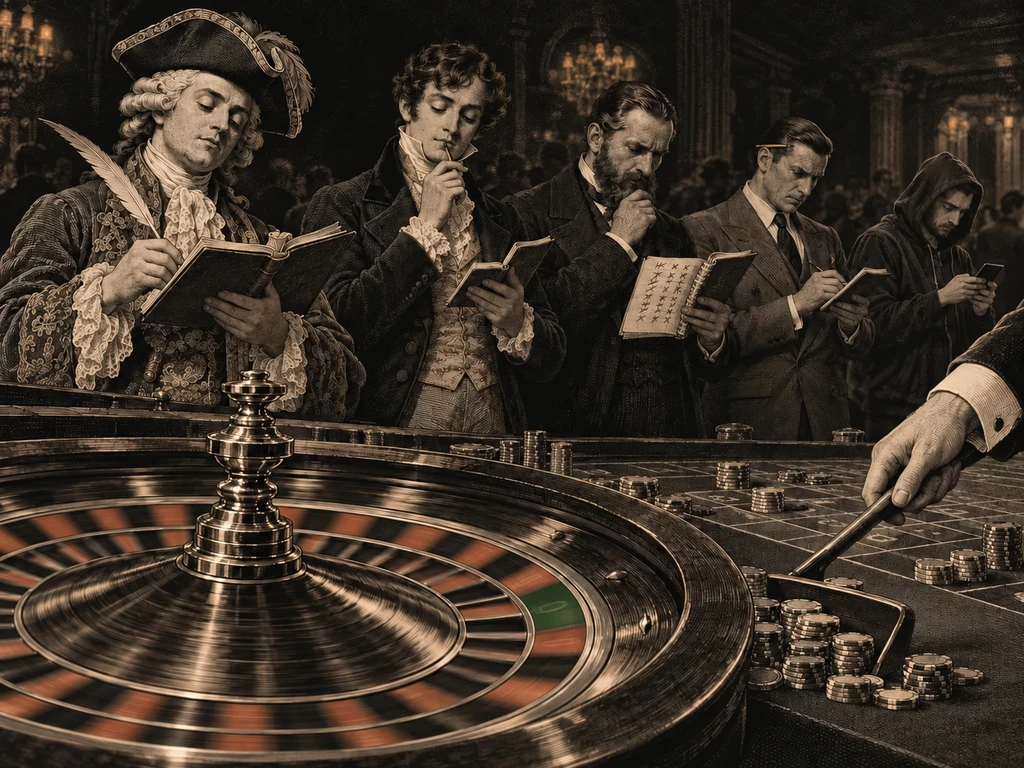
Ang Martingale gikan sa ika-18 nga siglo; ang D’Alembert gihinganlan sunod sa usa ka matematiko nga dili ganahan niini; ang Labouchère kalingawan sa usa ka politiko sa panahon ni Victoria. Wala usab kini molihok kaniadto.
Martingale
The 1762 Académie française dictionary records martingaleestratehiyaMartingaleProgresyon nga modoble sa pusta human sa matag pildi. Tan-awa ang seksyon sa Estratehiya kon unsay mahimo ug dili mahimo niini.Basaha tanan → as a gambling term for staking what has been lost. Its 1878 edition explicitly describes doubling after a loss and also uses the word more broadly for betting schemes. These entries document usage; they do not identify a single inventor.
Today the familiar doubling progressionestratehiyaProgresyonBisan unsang lagda nga mag-usab sa pusta base sa miaging mga resulta. Ang negatibo nga mga progresyon mopataas niini human sa pildi, ang positibo human sa daog.Basaha tanan → aims to recover previous losses and gain one starting unitkwartaYunitAng base nga pusta nga gigamit sa usa ka sistema o magdudula. Ang mga progresyon gihulagway sa mga yunit aron magamit kini sa bisan unsang lamesa.Basaha tanan → when a win arrives. A finite bankrollkwartaPundo sa dulaAng tibuok kantidad nga gigahin alang sa pagdula. Ang pagdumala sa pundo sa dula mao ang pagdesisyon kon pila niini ang irisgo matag pusta ug matag sesyon.Basaha tanan → or table limitlamesaLimitasyon sa lamesaMinimum ug maximum nga pusta nga gitugotan. Ang maximum mao ang mopahunong sa mga progresyon nga nagdoble.Basaha tanan → can stop the sequence first. The Strategy section shows how those limits affect a session.
D’Alembert
The progression bearing d’Alembert’s name raises the stake by one unit after a loss and lowers it after a win. The name alone does not prove who devised or endorsed the betting rule.
Its mathematical issue is straightforward: on independent spinsmatematikaIndependente nga mga tuyokAng matag tuyok adunay parehas nga mga probabilidad bisan unsa pa ang kasaysayan. Ang sukaranan sa matag kuwenta niini nga site.Basaha tanan →, a run of one outcome does not make the opposite outcome due. A famous namesake does not change that assumption or the payoutkwartaBayad sa daogUnsay ibalik sa nidaog nga pusta, gipahayag isip “X sa 1” dugang sa gibalik nga pusta.Basaha tanan →.
Labouchère
The cancellation system uses a list of numbers to determine the next stake. A win removes entries and a loss adds an entry; the Strategy section sets out the rules and examples. Historical stories about its namesake should be distinguished from evidence that the method creates an advantage.
A sequence may clear with a profit, but a losing run can leave a growing list and larger required stakes. How often it clears depends on the starting list, bankroll, limits and stopping rule. There is no universal success percentage.
Roulette sa Monte CarloEstratehiya sa Roulette nga Labouchère
Ang ika-20 nga siglo
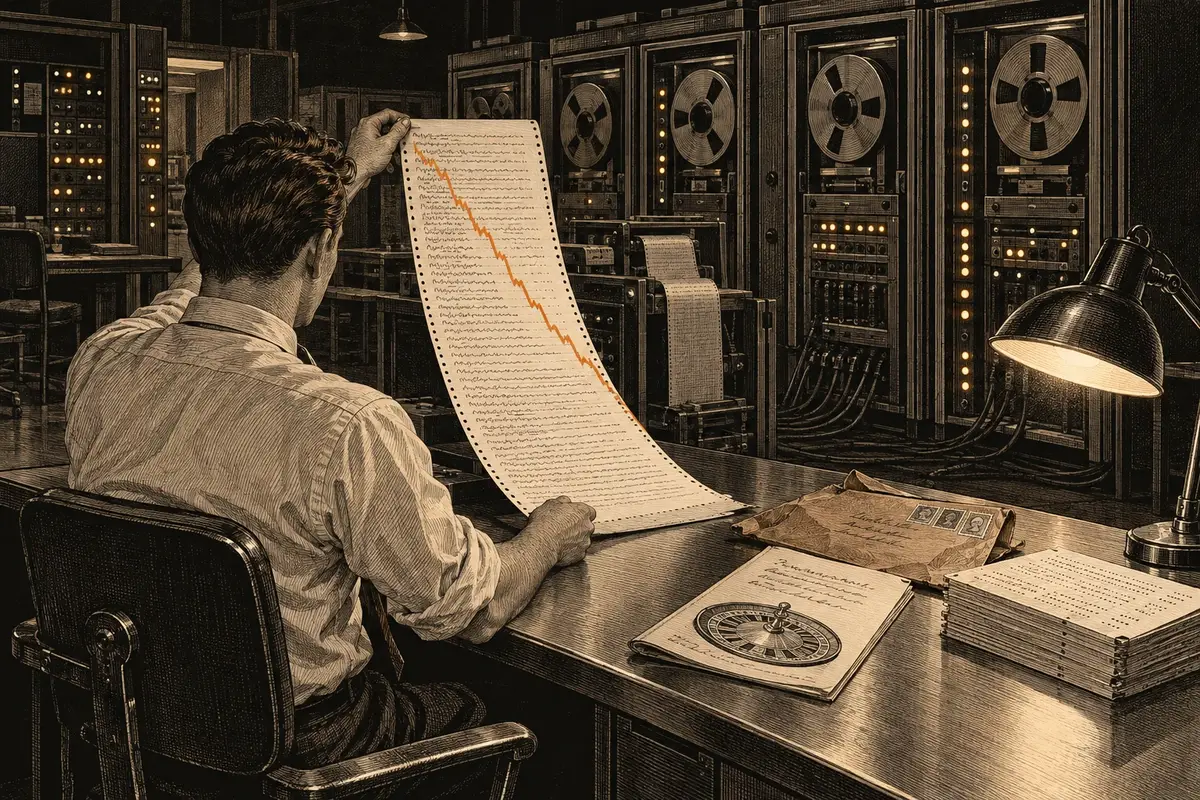
A simulation can show how a specified system behaves under a chosen wheel model. It cannot test every possible rule, and a finite run need not return exactly the theoretical house edgematematikaBentaha sa casinoAng bahin sa matag pusta nga gitipigan sa casino sa average: 2.70% sa Uropanhon nga roulette.Basaha tanan →.
For independent uniform single-zeroligidSeroAng usa ra ka berde nga bulsa nga walay even-money, dosena o kolum nga pusta ang motabon; ang gigikanan sa bentaha sa casino. Gitawag usab: single zero, 0.Basaha tanan → spins with standard full-loss-on-zero payouts, each unit staked has expected net return −1/37. For a bounded session whose stakes are chosen using information available before each spin, adding the conditional expectations gives expected lossmatematikaGidahom nga kapildihanAng gidahom nga bili gipadaghan sa tibuok kantidad nga gipusta; ang average nga kantidad nga mapildi sulod sa usa ka sesyon o usa ka yugto.Basaha tanan → equal to 1/37 of expected turnoverkwartaKinatibuk-ang gipustaAng tibuok kantidad nga gipusta sulod sa usa ka sesyon o yugto, lakip ang mga daog nga gipusta pag-usab. Gitawag usab: handle, action.Basaha tanan →. Stopping or changing stakes can change the distribution of results, but not create positive expectation under those assumptions. Other payouts, such as la partagelagdaLa partagePranses nga lagda: kon mogawas ang sero, ang katunga sa even-money nga pusta ibalik. Gitunga ang bentaha sa casino sa maong mga pusta ngadto sa 1.35%.Basaha tanan →, need their own calculation.
Mito: Estratehiya sa Roulette nga Kanunay ModaogEstratehiya sa Roulette nga Fibonacci
Nganong nagpabilin sila
A demonstration can end in profit without showing that the method has an edge. Some rules favor frequent small wins at the cost of occasional large losses; others do the reverse. The proportions depend on the exact rules and limits.
When comparing systems, look at all completed sessions, total stakes, losses and stopping conditions. A selected winning example leaves out the information needed to assess the claim.
Mga sistema nga gibaligya
Systems have also been sold with elaborate names and entry rules. The examples below illustrate the arithmetic of specific rules; they are not evidence of who first invented or marketed them. Waiting for a pattern does not alter the next independent spin’s probabilities.
Ang usa nga dili sistema
Mga lagda sa paghunong: pagdesisyon daan kon pila ang mapildi o madaog ug dayon mobiya. Kasagaran gibaligya kini isip bahin sa usa ka sistema ug kini ra ang bahin nga adunay epekto, kay gipakunhod niini ang kinatibuk-ang gipusta. Wala kini ginganlan, nga haom ra.
Mga pangutana
Ang Martingale, sa usa ka siglo o labaw pa. Ang pagdoble human sa pildi mao ang unang ideya sa tanan.
Si d’Alembert ang pinakaduol, sa wala tuyoa. Si Pascal, Fermat, Huygens, Bernoulli ug Laplace tanan nagpatin-aw kon nganong mapakyas kini.
Kay kadaghanan sa mga sesyon modaog, ug barato ra paghimo og video sa usa ka sesyon nga nidaog.
Komiks nga pahulay
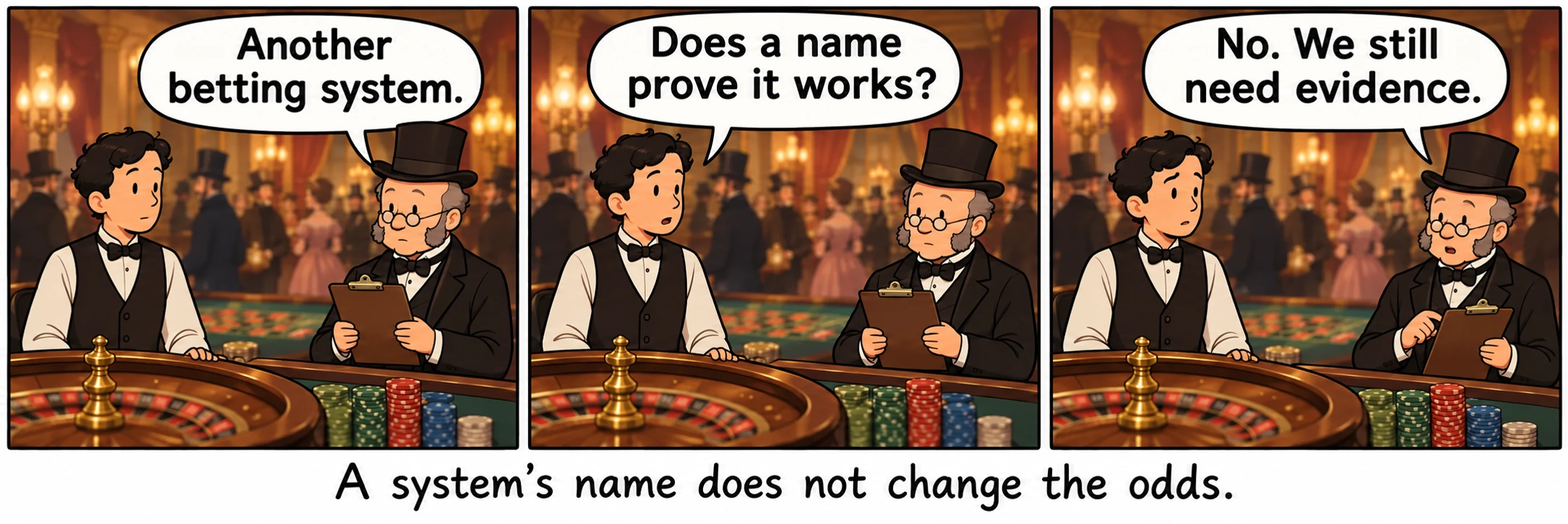
Duha ka siglo sa mga ngalan. Usa ka numero.
Mga Tinubdan
- Thorp, E. O. “Optimal gambling systems for favorable games.”
- Thorp, E. O. The Mathematics of Gambling.
- Doob, J. L. “Note on probability.”
- Halmos, P. R. “Invariants of certain stochastic transformations: the mathematical theory of gambling systems.”
- d’Alembert, J. “Croix ou pile.”
- Schwartz, D. G. Roll the Bones: The History of Gambling.
- Kavanagh, T. M. Dice, Cards, Wheels: A Different History of French Culture.
- Bollman, M. Mathematics of the Big Four Casino Table Games: Blackjack, Baccarat, Craps, & Roulette.
- Académie française, martingale, 1762
- Académie française, martingale, 1878